Eyelid Fat Removed Too Much in Korea ETONNE Plastic Surgery
Removing too much upper eyelid fat during blepharoplasty can leave the eyes looking hollow, aged, or unnaturally deep. At ETONNE Plastic Surgery in Gangnam, Seoul, revision upper blepharoplasty is customized to restore lost volume, soften hollow eyelids, improve eyelid function, and recreate a natural upper eyelid contour. Every revision is carefully planned because scar tissue and previous surgery make correction more technically demanding.
Revision Surgery for Excessive Eyelid Fat Removal
Upper eyelid fat helps support a youthful, smooth contour. When excessive fat is removed during double eyelid surgery or upper blepharoplasty, the eyelids may become hollow, sunken, or overly deep. Some patients also experience tightness, visible bony contours, or difficulty closing their eyes comfortably.
Revision surgery focuses on restoring volume and improving eyelid anatomy rather than removing additional tissue.
Common concerns include:
- Hollow upper eyelids
- Sunken eyes
- Deep upper eyelid crease
- Skeletonized eyelids
- High double eyelid crease
- Tight eyelids
- Difficulty closing the eyes
- Premature aged appearance
- Eyelid asymmetry
- Unsatisfactory blepharoplasty result
Why Does Excessive Fat Removal Happen?
An overly hollow upper eyelid may result from:
- Excessive fat removal
- Aggressive blepharoplasty
- Multiple revision surgeries
- Scar tissue contraction
- High crease fixation
- Natural age-related volume loss
- Individual healing characteristics
Careful evaluation determines whether correction requires fat repositioning, micro-fat grafting, scar release, crease adjustment, or a combination of techniques.
ETONNE Revision Approach
Every revision begins with a personalized consultation.
Comprehensive Assessment
- Previous surgical history
- Remaining eyelid volume
- Scar tissue
- Crease position
- Levator muscle function
- Skin quality
- Eyelid closure
- Overall facial symmetry
Customized Revision Surgery
Depending on the underlying cause, surgery may include:
- Micro-fat grafting
- Fat repositioning
- Scar tissue release
- Adhesion removal
- Crease reconstruction
- Soft tissue restoration
- Ptosis correction when indicated
- Scar refinement
The objective is to restore a youthful upper eyelid contour while maintaining comfortable blinking and natural eye movement.
Recovery
Typical recovery includes:
- Week 1: Swelling and bruising
- Weeks 2–4: Improved eyelid contour
- Months 2–3: Volume settles naturally
- Months 6–12: Final scar maturation and long-term results
Revision surgery generally requires more healing time than primary blepharoplasty because of previous scar tissue and tissue remodeling.
International Patients
ETONNE Plastic Surgery welcomes international patients seeking revision eyelid surgery in Korea.
Services include:
- English consultation
- Online photo evaluation
- Personalized treatment planning
- Recovery guidance
- Postoperative follow-up
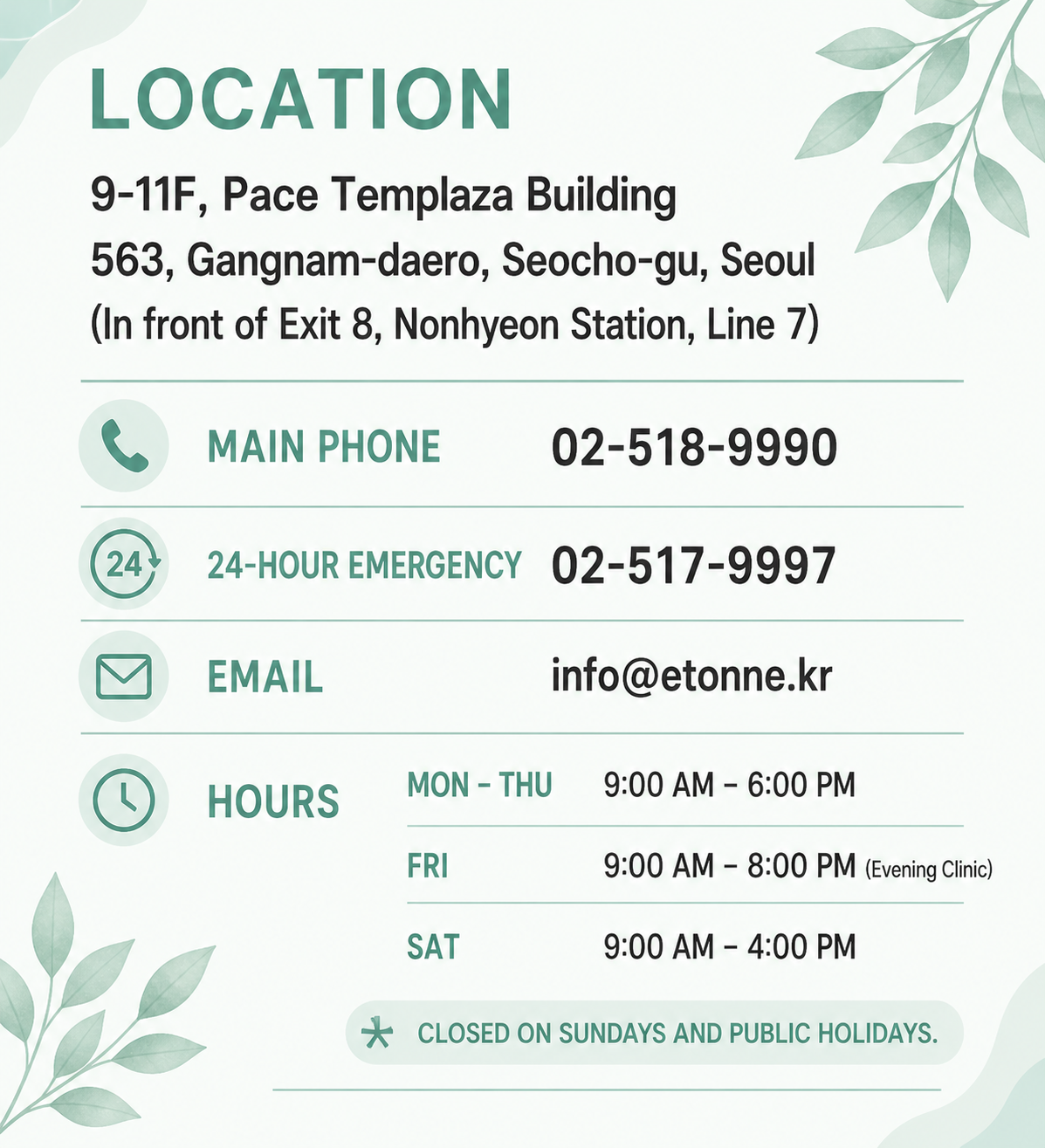
Clinic Address
ETONNE Plastic Surgery
563 Gangnam-daero, Seocho-gu, Seoul, South Korea
Why Choose ETONNE Plastic Surgery?
- Specialized revision eyelid surgery
- Personalized surgical planning
- Natural volume restoration
- Advanced scar management
- Functional and cosmetic improvement
- Conservative tissue preservation
- International patient support
- Convenient Gangnam location
Frequently Asked Questions
What happens if too much eyelid fat is removed?
Excessive fat removal can create hollow upper eyelids, deep creases, premature aging, eyelid tightness, and an unnatural appearance.
Can hollow upper eyelids be corrected?
Yes. Many patients benefit from personalized revision surgery using fat repositioning, micro-fat grafting, or soft tissue reconstruction to restore natural volume.
Why do my eyes look older after blepharoplasty?
Removing excessive upper eyelid fat may expose the underlying eye socket, creating a sunken appearance that makes the eyes look older.
Can fat be replaced after eyelid surgery?
In selected patients, surgeons may restore volume using carefully placed micro-fat grafts or reposition remaining fat to improve contour.
Is revision surgery more difficult?
Yes. Scar tissue and altered anatomy make revision upper blepharoplasty significantly more complex than primary surgery.
When should revision surgery be performed?
Most patients should wait approximately 6–12 months after the original surgery unless earlier intervention is medically necessary.
Will the results look natural?
The goal is to restore soft upper eyelid volume and create a balanced appearance that matches your facial anatomy without overfilling.
How long should I stay in Korea?
Most international patients remain in Korea for approximately 7–14 days depending on surgery and follow-up appointments.
Can I receive an online consultation?
Yes. Initial evaluation typically begins with photographs and information about your previous eyelid surgery.
Why choose ETONNE Plastic Surgery?
ETONNE specializes in complex revision eyelid surgery with individualized treatment plans focused on restoring natural eyelid volume, improving function, and achieving long-term aesthetic balance.