Low Eyelid Crease After Surgery in Korea | Revision Double Eyelid Surgery at ETONNE Plastic Surgery
A low eyelid crease after double eyelid surgery may occur when the crease is designed too low, fixation is incomplete, or excess upper eyelid skin causes the fold to descend during healing. At ETONNE Plastic Surgery in Gangnam, Seoul, revision eyelid surgery is customized to raise and stabilize the eyelid crease while creating a balanced, natural-looking result that complements each patient's facial anatomy.
Low Eyelid Crease Revision Surgery
A double eyelid crease that sits too low can make the eyes appear smaller, heavier, or less defined than expected. Some patients notice that the crease gradually drops after surgery, while others feel the original fold was created too close to the eyelashes.
Revision surgery focuses on creating a stable, appropriately positioned eyelid crease while preserving eyelid function and natural movement.
Common concerns include:
- Low double eyelid crease
- Small-looking eyes
- Heavy upper eyelids
- Fading eyelid fold
- Uneven eyelid creases
- Hidden double eyelids
- Loose or unstable crease
- Eyelid asymmetry
- Persistent droopy appearance
- Unsatisfactory cosmetic result
Why Does a Low Eyelid Crease Develop?
A low eyelid crease may result from:
- Crease designed too low
- Incomplete fixation to the levator muscle
- Excess upper eyelid skin
- Scar tissue changes
- Hidden ptosis
- Previous eyelid surgery
- Individual healing differences
A thorough examination helps determine whether revision requires crease elevation alone or should also include ptosis correction.
ETONNE Revision Approach
Every patient undergoes a personalized consultation before surgery.
Comprehensive Assessment
- Previous surgical history
- Existing crease height
- Scar tissue
- Levator muscle function
- Skin quality
- Fat distribution
- Eyelid symmetry
- Eye opening
Customized Revision Surgery
Depending on the cause, surgery may include:
- Raising the eyelid crease
- Scar tissue release
- New crease fixation
- Ptosis correction when indicated
- Skin adjustment
- Fat repositioning
- Eyelid balancing
- Scar refinement
The goal is to create a natural, well-defined crease that remains stable during blinking and everyday facial expressions.
Recovery
Typical healing includes:
- Week 1: Swelling and bruising
- Weeks 2–4: Improved crease definition
- Months 2–3: Better symmetry
- Months 6–12: Final scar maturation
Revision surgery generally requires more healing time than primary double eyelid surgery because of existing scar tissue.
International Patients
ETONNE Plastic Surgery welcomes patients traveling to Korea for revision eyelid surgery.
International services include:
- English consultation
- Online photo evaluation
- Personalized treatment planning
- Recovery guidance
- Postoperative follow-up
Clinic Address
ETONNE Plastic Surgery
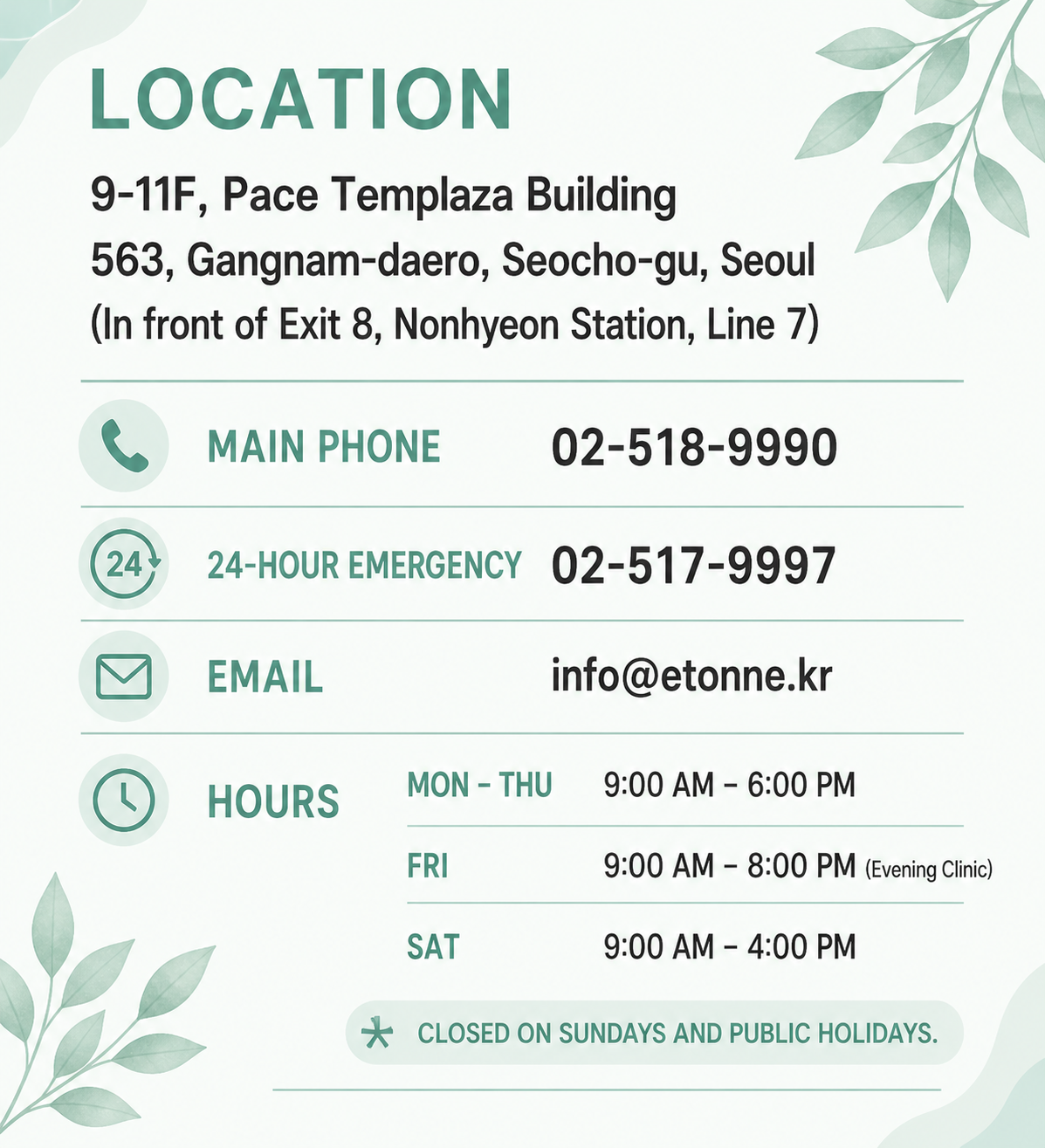
563 Gangnam-daero, Seocho-gu, Seoul, South Korea
Why Choose ETONNE Plastic Surgery?
- Specialized revision eyelid surgery
- Personalized surgical planning
- Natural-looking crease reconstruction
- Functional and cosmetic improvement
- Conservative tissue preservation
- Advanced scar management
- International patient care
- Convenient Gangnam location
Frequently Asked Questions
Why is my eyelid crease lower than expected after surgery?
A low crease may occur because the crease was designed too low, fixation loosened during healing, or excess skin caused the fold to descend.
Can a low eyelid crease be raised?
Yes. Many patients can achieve a higher, more natural-looking crease through individualized revision surgery.
Can ptosis make my eyelid crease appear lower?
Yes. Hidden or residual ptosis can make the crease appear lower and the eyes look smaller, even after double eyelid surgery.
Is revision surgery more difficult?
Yes. Scar tissue and altered anatomy make revision surgery more technically demanding than primary eyelid surgery.
When should revision surgery be performed?
Most surgeons recommend waiting approximately six to twelve months after the original surgery unless earlier treatment is medically necessary.
Will my new crease look natural?
Revision surgery is designed to create a crease that matches your facial proportions and eyelid anatomy while maintaining natural movement.
Can asymmetrical eyelid creases be corrected?
Many patients experience significant improvement in eyelid symmetry following personalized revision surgery.
How long should I stay in Korea?
International patients typically remain in Korea for about 7–14 days depending on their procedure and follow-up schedule.
Can I receive an online consultation?
Yes. Initial assessment often begins with photographs and information about your previous eyelid surgery.
Why choose ETONNE Plastic Surgery?
ETONNE specializes in revision eyelid surgery with individualized planning, meticulous scar management, natural aesthetics, and comprehensive postoperative care