Overcorrected Upper Eyelids in Korea | Revision Upper Blepharoplasty at ETONNE Plastic Surgery
Overcorrected upper eyelids can occur when too much skin, fat, or muscle is removed during blepharoplasty, resulting in a hollow appearance, difficulty closing the eyes, or an unnaturally high eyelid crease. At ETONNE Plastic Surgery in Gangnam, Seoul, revision upper blepharoplasty is customized to restore natural eyelid contours, improve eyelid function, and achieve balanced, long-lasting results. Revision surgery is more complex than primary surgery because it involves scar tissue and altered anatomy.
Overcorrected Upper Eyelid Revision Surgery
Overcorrection is one of the most challenging complications following upper blepharoplasty. Excessive tissue removal may leave the eyelids appearing hollow, overly tight, or unable to close comfortably. In some patients, functional symptoms such as dry eyes or irritation accompany cosmetic concerns.
Revision surgery focuses on restoring both appearance and eyelid function rather than simply removing additional tissue.
Common signs of overcorrected upper eyelids include:
- Hollow upper eyelids
- Excessively high eyelid crease
- Tight eyelids
- Difficulty closing the eyes completely
- Dry or irritated eyes
- Visible upper eyelid scarring
- Unnatural or surprised appearance
- Eyelid asymmetry
- Persistent discomfort
- Sunken eye appearance
Why Revision Surgery Is More Complex
Revision upper blepharoplasty requires careful management of scar tissue and previously altered anatomy. Depending on the severity of overcorrection, surgery may involve:
Personalized Evaluation
- Previous surgical history
- Scar tissue assessment
- Eyelid muscle function
- Remaining skin availability
- Fat volume evaluation
- Eyelid symmetry
- Eye closure function
Customized Surgical Techniques
Treatment may include:
- Scar tissue release
- Eyelid crease repositioning
- Fat repositioning
- Micro-fat grafting
- Tissue reconstruction
- Ptosis adjustment when necessary
- Skin redistribution
- Functional eyelid repair
The objective is to restore a softer, more natural eyelid while maintaining comfortable blinking and eye protection.
Recovery After Revision
Recovery depends on the extent of correction.
Typical timeline:
- Week 1: Swelling and bruising
- Weeks 2–4: Noticeable improvement
- Months 2–3: Improved eyelid contour
- Months 6–12: Final healing and scar maturation
Because revision surgery involves previously operated tissue, healing often takes longer than primary blepharoplasty.
International Patients
ETONNE Plastic Surgery welcomes patients traveling to Korea for revision eyelid surgery.
International services include:
- English consultation
- Online photo evaluation
- Individualized treatment planning
- Recovery guidance
- Postoperative follow-up
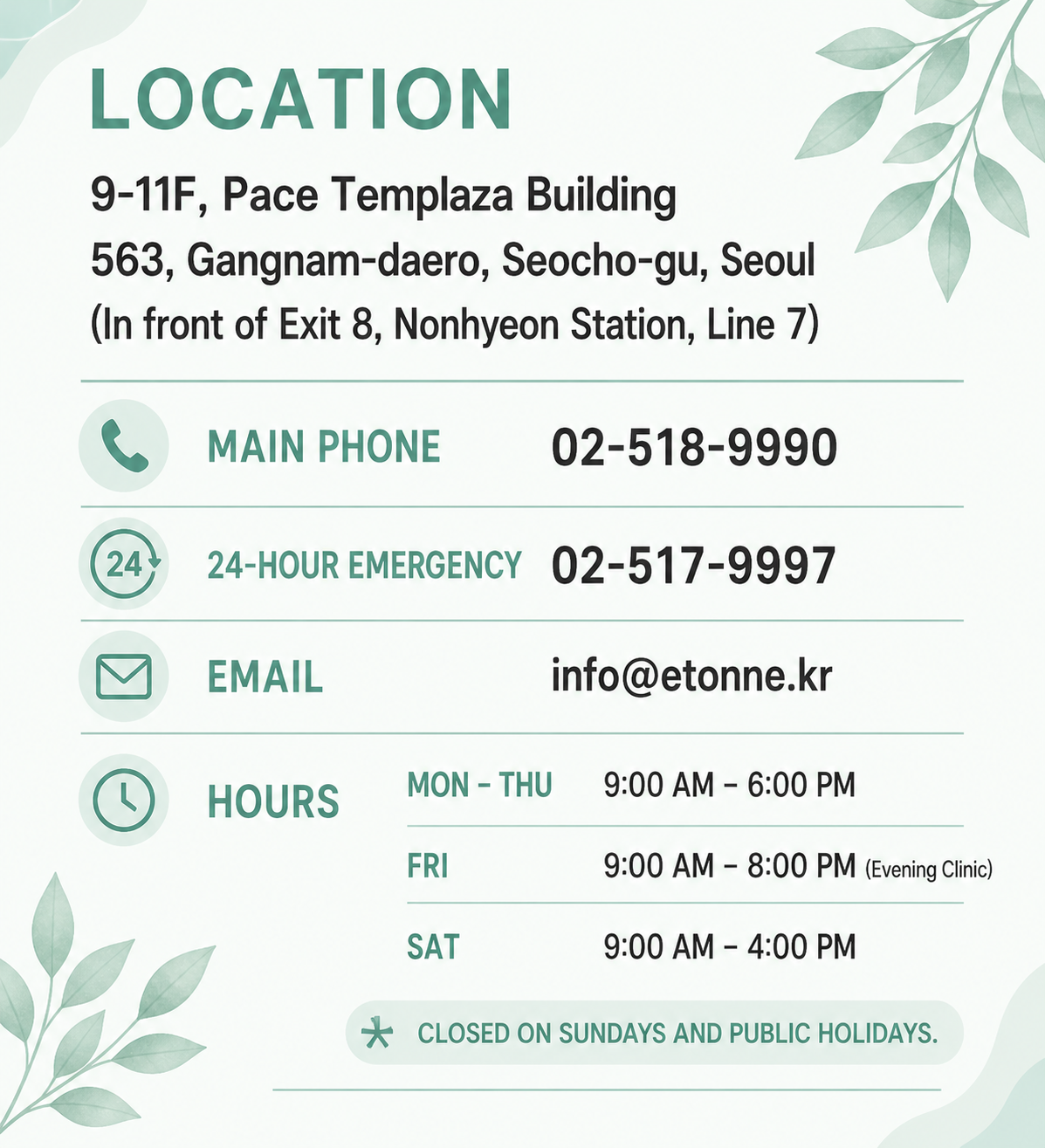
Clinic Address
ETONNE Plastic Surgery
563 Gangnam-daero, Seocho-gu, Seoul, South Korea
Why Choose ETONNE Plastic Surgery?
- Specialized revision eyelid surgery
- Personalized surgical planning
- Conservative tissue preservation
- Natural-looking correction
- Functional and cosmetic restoration
- Advanced scar management
- International patient support
- Prime Gangnam location
Frequently Asked Questions
What causes overcorrected upper eyelids?
Overcorrection usually occurs when excessive skin, muscle, or fat is removed during upper blepharoplasty, creating a hollow or overly tight appearance.
Can overcorrected eyelids be corrected?
Many cases can be significantly improved through individualized revision surgery using tissue repositioning, fat grafting, or scar release techniques.
Why do my eyes look hollow after eyelid surgery?
A hollow appearance often results from excessive fat removal or loss of upper eyelid volume during the original procedure.
Can difficulty closing my eyes be treated?
Yes. Revision surgery may improve eyelid closure by restoring tissue support and correcting excessive tightness.
Is fat grafting used during revision surgery?
In selected patients, fat grafting may restore lost upper eyelid volume and soften hollow contours.
When should revision surgery be performed?
Most patients should wait approximately 6–12 months after the original surgery to allow complete healing before revision.
Is revision surgery more difficult?
Yes. Scar tissue and altered anatomy make revision upper blepharoplasty technically more demanding than primary surgery.
How long should I stay in Korea?
International patients commonly remain in Korea for 7–14 days depending on their recovery and follow-up schedule.
Can I have an online consultation before traveling?
Yes. Initial evaluation often begins with photographs and your previous surgical records.
Why choose ETONNE for revision upper blepharoplasty?
ETONNE emphasizes individualized planning, natural eyelid aesthetics, functional restoration, and comprehensive postoperative care.