Undercorrected Ptosis Surgery in Korea | Revision Ptosis Surgery at ETONNE Plastic Surgery
Undercorrected ptosis surgery occurs when the eyelid remains droopy or asymmetrical after ptosis correction. At ETONNE Plastic Surgery in Gangnam, Seoul, revision ptosis surgery is individually planned to improve eyelid height, symmetry, and function while creating a natural appearance. Revision surgery requires careful evaluation of levator muscle function, scar tissue, and healing from the previous operation.
Revision Surgery for Undercorrected Ptosis
Ptosis surgery is performed to lift drooping upper eyelids by strengthening or adjusting the muscles that elevate the eyelid. In some patients, however, the eyelid may remain lower than intended after surgery. This is known as undercorrected ptosis.
Undercorrection may affect one or both eyelids and can leave the eyes appearing tired, uneven, or partially obstructing vision. When the eyelid position remains stable after healing, revision surgery may improve both function and aesthetics.
Common signs include:
- Persistent drooping eyelid
- Uneven eyelid height
- Residual sleepy appearance
- Small-looking eyes
- Eyelid asymmetry
- Vision partially blocked by the upper eyelid
- Incomplete cosmetic improvement
- Recurrent ptosis after previous surgery
Why Does Undercorrection Happen?
Several factors may contribute to incomplete correction after ptosis surgery, including:
- Weak levator muscle function
- Scar tissue formation
- Healing variations
- Conservative initial correction
- Recurrence of ptosis
- Complex eyelid anatomy
- Previous eyelid surgeries
Because every eyelid heals differently, accurate evaluation is essential before considering revision surgery.
How ETONNE Plastic Surgery Approaches Revision
Every revision begins with a detailed examination of:
Comprehensive Assessment
- Previous surgical records
- Eyelid height
- Levator muscle function
- Scar tissue
- Eyelid crease position
- Eye symmetry
- Visual function
- Skin quality
Customized Revision Surgery
Depending on the findings, surgery may include:
- Levator advancement
- Levator adjustment
- Scar tissue release
- Eyelid height correction
- Eyelid crease refinement
- Symmetry balancing
- Soft tissue repositioning
The goal is to restore comfortable eyelid opening while maintaining a natural appearance and preserving normal blinking whenever possible.
Recovery After Revision Ptosis Surgery
Healing varies depending on the complexity of the revision.
Typical recovery:
- Week 1: Swelling and bruising
- Weeks 2–4: Improved eyelid position
- Months 2–3: Better symmetry
- Months 6–12: Final tissue remodeling
Many surgeons recommend waiting until eyelid position has stabilized before performing revision unless functional problems require earlier treatment.
International Patients
ETONNE Plastic Surgery welcomes international patients seeking revision ptosis surgery in Korea.
Services include:
- English consultation
- Online photo assessment
- Personalized surgical planning
- Recovery instructions
- Follow-up care
Clinic Address
ETONNE Plastic Surgery
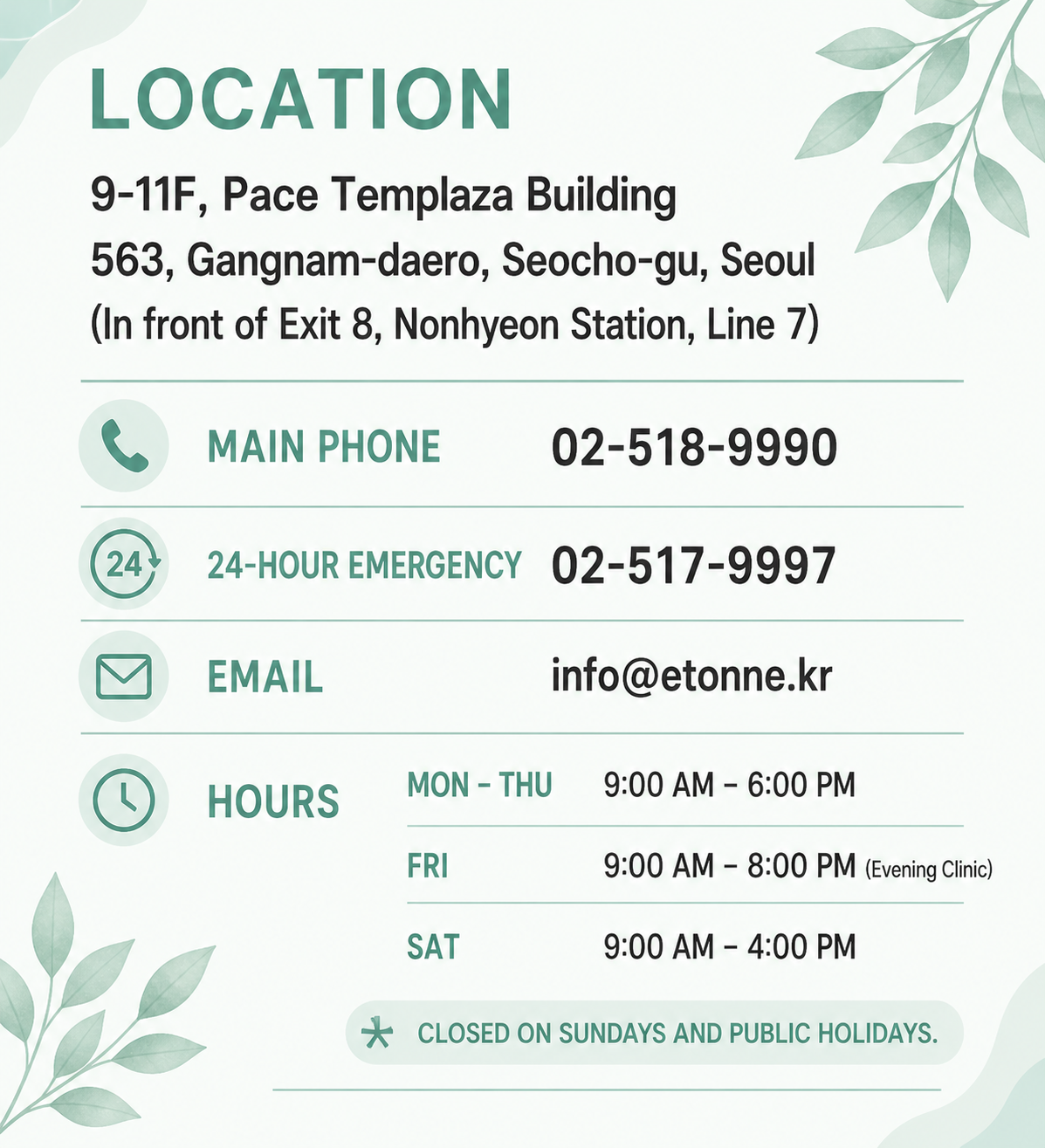
563 Gangnam-daero, Seocho-gu, Seoul, South Korea
Why Choose ETONNE Plastic Surgery?
- Specialized revision eyelid surgery
- Personalized treatment planning
- Functional and cosmetic correction
- Natural eyelid aesthetics
- Advanced scar management
- Conservative surgical techniques
- International patient support
- Convenient Gangnam location
Frequently Asked Questions
What is undercorrected ptosis surgery?
It means the upper eyelid remains lower than intended after ptosis correction, resulting in persistent drooping or asymmetry.
Can undercorrected ptosis be corrected?
Many cases can be significantly improved through customized revision surgery after the eyelid has healed sufficiently.
Why does ptosis return after surgery?
Recurrence may occur because of healing differences, scar tissue, muscle weakness, or progression of the underlying condition.
When should revision ptosis surgery be performed?
Most patients should wait approximately 6–12 months after the original surgery unless functional problems require earlier revision.
Is revision ptosis surgery more difficult?
Yes. Scar tissue and altered anatomy make revision surgery more technically demanding than primary ptosis surgery.
Can asymmetrical eyelids be improved?
Yes. Revision surgery commonly aims to improve eyelid height, contour, and symmetry.
Will I have another incision?
Whenever appropriate, surgeons often use the previous eyelid crease incision to minimize additional visible scarring.
How long should I stay in Korea?
International patients generally remain in Korea for about 7–14 days depending on their recovery and follow-up schedule.
Can I receive an online consultation?
Yes. Preliminary assessment usually begins with photographs and details of your previous surgery.
Why choose ETONNE for revision ptosis surgery?
ETONNE focuses on individualized revision planning, natural-looking eyelid balance, functional improvement, and comprehensive postoperative care.